US Markets Edge Higher Despite Mixed Signals
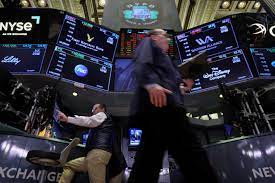
US equity markets moved modestly higher on Tuesday, building on improved sentiment earlier in the week despite rising oil prices and ongoing geopolitical tensions.
The S&P 500 and Nasdaq Composite both advanced, supported by strength in energy stocks as crude oil traded around $96 per barrel. Smaller-cap stocks outperformed, with the Russell 2000 rising 0.7%, signalling broader risk appetite.
Sector Performance and Market Drivers
Sector performance was mixed. Energy stocks led gains, while defensive sectors such as healthcare, consumer staples, and utilities lagged. Bond yields edged lower, reflecting resilience in investor sentiment even as higher oil prices raised inflation concerns.
Economic Data and Trade Developments
Economic data provided a mixed backdrop. Pending home sales rose 1.8% in February, beating expectations, while labour market indicators softened and regional business surveys remained weak.
Investor confidence was also supported by trade developments, with the European Union restarting ratification of its trade agreement with the United States.
Corporate developments contributed to market moves, including gains in technology and mobility shares linked to autonomous vehicle announcements, while some companies declined sharply following weak earnings.
Overall, U.S. equities continue to navigate a complex environment shaped by geopolitical risks, evolving central bank expectations and uneven economic momentum.
Latest Market and Economic Update
Asia-Pacific Markets
Asian equity markets mostly rose on Wednesday, led by strong gains in technology shares in Japan and South Korea. Japan’s Nikkei 225 climbed 2.5% and South Korea’s KOSPI surged 4%, supported by improved sentiment from AI optimism offsetting geopolitical concerns. However, Chinese markets lagged, while investors remained cautious ahead of the US Federal Reserve policy decision.
US Futures and After-Hours Moves
US equity futures were little changed to slightly higher overnight, with:
- S&P 500 futures up 0.3%
- Nasdaq 100 futures rising 0.4%
- Dow futures gaining 0.3%
In after-hours trading, DocuSign rose 1.5%, while Lululemon and Oklo fell over 1% and 2% respectively on earnings.
European Markets
European equity markets rebounded modestly on Tuesday despite escalating tensions with Iran.
The STOXX 50 rose 0.3% and the STOXX 600 gained 0.5%. Utilities and energy stocks, including E.ON, Enel, Repsol, and Eni, led gains, while defence, technology, and luxury sectors declined, reflecting cautious investor sentiment amid geopolitical uncertainty.
Commodities and Currency Movements
Currency Markets
The U.S. dollar eased slightly, with the dollar index up 0.06% to 99.61, as easing oil prices lifted risk appetite ahead of central bank meetings. The euro declined 0.05% to $1.1532, while the yen weakened to 159.00 per dollar. Commodity currencies, including the Australian dollar and New Zealand kiwi, saw modest gains versus the greenback.
Oil Markets
Oil prices eased in Asian trading, with Brent down 2.3% to $101.05 and WTI falling 3.3% to $93.03, after Iraq and Kurdish authorities agreed to resume exports through Turkey’s Ceyhan port, a key Mediterranean shipping hub.
Gains were also capped by rising U.S. inventories, though prices stayed elevated above $100 amid the ongoing Iran conflict.Markets saw notable movements in currencies and commodities as investors reacted to global developments.
Oil and Currency Trends
Oil prices declined in Asian trading, with Brent falling to $101.05 and WTI dropping to $93.03 following news of resumed exports through Iraq’s Ceyhan port.
The US dollar remained relatively stable, while commodity-linked currencies such as the Australian and New Zealand dollars posted gains. The euro and Japanese yen weakened slightly against the dollar.
Equities on the Move
Several major companies experienced significant share price movements driven by earnings, strategic developments, and analyst updates.
Technology and AI Developments
Nvidia will resume AI chip production for China after securing export licences, restarting its H200 line. CEO Jensen Huang also projected $1 trillion in chip orders by 2027, highlighting strong AI demand. The firm unveiled faster next generation chips, despite regulatory challenges and a previous $5.5 billion hit from restrictions.
Amazon CEO Andy Jassy said artificial intelligence could help Amazon Web Services reach $600 billion in annual revenue, doubling his previous 10-year estimate of $300 billion. He highlighted AI’s potential to drive major growth and reshape the future of cloud computing.
Samsung Electronics is considering multi-year memory chip contracts of three to five years to stabilise supply amid rising AI-driven demand and an emerging shortage affecting profits and prices across sectors. Rival SK Hynix plans measures to support pricing. Samsung shares rose sharply, boosted by the shortage and the launch of its advanced HBM4E memory for AI.
OpenAI partnered with Amazon Web Services to sell AI products to U.S. government employees for classified and unclassified work, expanding its federal footprint beyond the Pentagon contract. Amazon shares rose nearly 1%. Investors will watch whether government credibility helps OpenAI secure enterprise deals, while Anthropic’s Pentagon lawsuit and policy shifts create opportunities.
Corporate and Sector Highlights
Deutsche Bank AG CEO Christian Sewing said first-quarter trading revenue is expected to decline due to adverse currency movements, while overall investment bank revenue should remain flat as gains in origination and advisory offset fixed income weakness. Adjusted for FX, trading growth is seen, building on strong 2025 first-quarter earnings.
Lufthansa CEO Carsten Spohr said the Iran war could reduce Gulf carriers’ dominance on Asian routes and weaken European sovereignty by limiting direct connections. Lufthansa may see fewer slot allocations to Emirates, while North Atlantic routes are expected to carry more Americans than Europeans this summer, balancing prior demand shifts.
Unilever Plc is in early stages of considering a potential separation of its food business, including brands such as Hellmann’s, Knorr, Colman’s, Marmite, and Maille, as part of a broader portfolio streamlining strategy. No final decisions have been made, and any full or partial spin-off could be valued at tens of billions by 2027.
Lululemon forecast 2026 revenue of $11.35–11.50 billion and profit of $12.10–12.30 per share, below analysts’ estimates, citing import tariffs and weaker demand. The company appointed former Levi Strauss CEO Chip Bergh to the board amid a proxy fight and CEO search. Shares fell 1.5% in after hours despite strong holiday-quarter results.
Drone-software company Swarmer soared 452% from its $5 IPO to $27.61 on Tuesday, reflecting strong demand for drone and defence technology. The shares opened at $12.50, benefiting from broader sector momentum, rising defence budgets, and AI integration. Investors will watch trading stability, lock-up expirations, company fundamentals, and sector developments for sustainability.
Analyst Ratings and Forecasts
Three major brokerages UBS, Barclays, and Mizuho have raised oil price forecasts as the Iran conflict disrupts Strait of Hormuz flows. UBS expects Brent at $90 by June and $80 by March 2027, Barclays at $84 for 2026, and Mizuho at $73.25 Brent and $68.25 WTI, citing tight supply, outages, limited spare capacity, and geopolitical risks driving sustained higher prices.
Citigroup lowered its 12-month targets for Bitcoin to $112,000 and Ethereum to $3,175, from $143,000 and $4,304, citing weaker demand, slower network activity, and delays to U.S. digital asset legislation. Despite this, ETF inflows remain a key support, with overall outcomes highly dependent on macroeconomic conditions, adoption trends, and regulatory developments.
Analysts from Wolfe, Bernstein, Goldman Sachs, Morgan Stanley, and Stifel viewed Nvidia’s GTC 2026 updates positively, highlighting the $1 trillion AI chip revenue opportunity through 2027 as a floor. Key themes included accelerating demand, strong inference positioning, Groq integration, and AI roadmap strength.
Stifel maintained its Buy rating on Tesla with a $508 target, citing strong margins and EV demand from high petrol prices. Analyst Stephen Gengaro noted standout 4Q25 profitability and progress in FSD and Robotaxi. While subscriptions may weigh on near-term margins, they enhance recurring revenue. Significant 2026 investment underpins continued growth and a positive EV outlook.
HSBC downgraded Eli Lilly to Reduce, cutting its price target to $850 from $1,070. Analyst Rajesh Kumar cited overly optimistic obesity drug market expectations, rising price competition, and risks around Lilly’s oral drug launch. The broader Healthcare sector may outperform, but Lilly’s risk-reward profile is now considered unfavourable.
Key Events to Watch
Central Banks and Economic Data
Today’s key economic events include:
- U.S. Federal Reserve interest rate decision and FOMC projections
- Bank of Canada rate announcement
U.S. inflation and factory orders data will also be released, providing insight into economic momentum.
Earnings
Earnings reports will come from:
- Eni
- Tencent
- Micron Technology
- Munich Re
Disclaimer: This information is provided solely for educational and informational purposes and should not be construed as investment advice, advice on specific investments or investment decisions, tax advice, legal advice, or any other form of professional or regulatory advice. The information does not take into account your personal circumstances and is provided to you on the express understanding that it does not constitute advice and should not be relied upon in making any investment decision. Investing in financial instruments involves risk. You should conduct your own research before making any investment decisions and seek the assistance of a licensed financial advisor if you are unsure. No person should act on any opinion or information contained in this document without first obtaining appropriate professional advice. Calamatta Cuschieri Investment Services Limited does not accept liability for any actions, proceedings, costs, demands, expenses, damages, or losses suffered as a result of reliance on the information herein.