AI sell-off deepens as Nasdaq enters correction and the Bank of England raises rates

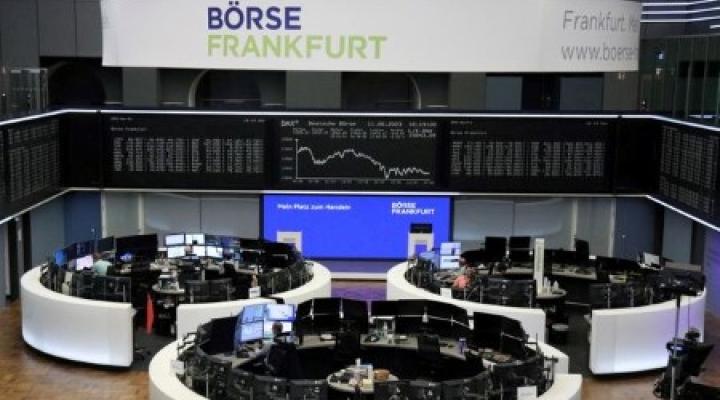
Global stock markets remained under heavy pressure on Friday as Thursday’s technology-driven sell-off spread across Asia. Investors are questioning whether current levels of spending on artificial intelligence, and the valuations attached to it, can be sustained. At the same time, the Bank of England surprised markets with a more hawkish rate decision, adding another layer of uncertainty for investors.
Global markets at a glance
The selling was concentrated in technology and semiconductor shares, but the weakness spread across Asian and European markets. Here is how the main markets performed.
US equities post their sharpest losses in months
Wall Street recorded its heaviest declines in months on Thursday. The Nasdaq dropped 5.5%, its worst single-day performance in 19 months, while the S&P 500 lost 4.4% and the Dow Jones fell 3.5%. The Nasdaq is now close to 12% below its recent high, placing it in correction territory, and market volatility climbed sharply.
Chipmakers and technology names led the declines. Nvidia shed more than 9%, and Qualcomm fell 9.5% after issuing weaker guidance.
Asian markets hit hardest by chip selling
The sell-off extended into Asia on Friday. South Korea’s Kospi fell by as much as 8.8%, which triggered a temporary suspension of trading, and Japan’s Nikkei declined 5.5%. Semiconductor stocks were among the worst performers, a sign of how closely the region is tied to the global AI investment cycle.
European stocks close lower
European markets also finished in negative territory. The Euro Stoxx 50 slipped 0.9% and the Stoxx 600 eased 0.4%. The European technology sector dropped by more than 4%, led by a 7% fall in ASML. Rheinmetall tumbled 16% after lowering its guidance for the full year.
Why investors are reassessing AI
Concerns about AI are no longer limited to valuations. Investors are now focusing on the sheer scale of capital spending needed to build out AI capabilities, the uncertain returns that spending may generate, and the possibility of stricter rules on data centre expansion following the Democrats’ midterm election wins. Goldman Sachs also identified aggressive repositioning by institutional investors as a contributing factor.
The sell-off reflects a reset in expectations rather than clear signs that the wider economy is weakening. US productivity growth and historically low jobless claims continue to point to a resilient economy, although investors are becoming more discerning about which companies and business models are likely to benefit from AI investment. US equity futures moved slightly higher after Thursday’s losses, hinting at some stabilisation, although sentiment remains fragile.
Bonds, currencies and commodities
As equities fell, investors turned to traditional safe havens, while oil prices reacted to fresh tensions in the Middle East.
Treasuries and the US dollar
Demand for safer assets rose as volatility increased. The yield on the US 10-year Treasury moved towards 4.85%, near its lowest level in two months, and the US dollar firmed as investors looked for protection.
Oil prices rebound
Oil prices recovered after new attacks on tankers in the Middle East revived fears of supply disruptions through the Strait of Hormuz. Even with this rebound, both Brent and WTI were still heading for significant losses over the week.
Bank of England raises rates to 4%
The Bank of England lifted its key interest rate by 0.25 percentage points to 4%, in an 8-1 vote. The central bank pointed to renewed inflationary pressure from higher energy prices linked to the conflict involving Iran. UK inflation stood at 3.5% in September and is forecast to rise towards 5% by the middle of 2027.
The decision was more hawkish than markets had expected and has opened the door to another increase as soon as December. Whether that happens will depend largely on how energy markets and the situation in the Middle East develop.
Company news and investment implications
AI infrastructure under closer scrutiny
Microsoft is reported to be tightening its oversight of projects that involve the neocloud providers Nebius, IREN and Nscale. The company is also said to be rethinking further partnerships as it focuses on growing its own data centre capacity, and it has pulled out of some projects after infrastructure delays. These reports have heightened concerns about the speed and economics of AI infrastructure growth, contributing to sharp declines in the shares of the companies involved and adding to the wider technology sell-off.
Regulation is emerging as another risk. Goldman Sachs expects the Democrats’ better-than-expected midterm results to increase pressure for tighter controls on AI and data centres, particularly at state and local level. This could create short-term uncertainty for utilities and independent power producers that are exposed to data centre growth, although Goldman considers any restrictions likely to be temporary.
In a separate development, Senator Richard Blumenthal has asked major technology companies, including Apple, Nvidia, Amazon and Microsoft, to disclose details of any donations towards President Trump’s proposed White House ballroom. The request points to closer scrutiny of the relationships between large corporations and the administration.
Anthropic IPO and Nvidia’s China exposure
Anthropic’s possible initial public offering now faces a tougher market environment. The company is reportedly considering a valuation of $1.5tn or more. Given its large computing and infrastructure commitments, the listing could serve as an important test of investor willingness to fund the next stage of AI development in the wake of the recent technology sell-off.
Nvidia continues to face uncertainty over its access to China. Around 600,000 of its H200 AI chips are reported to be sitting in Hong Kong while they await approval for shipment to mainland China. Although demand from Chinese technology companies remains strong, Beijing has not yet approved large-scale imports, and US export controls continue to restrict access to advanced processors. These supply constraints have driven prices sharply higher in unofficial channels, underlining how important the Chinese market remains to Nvidia’s long-term growth.
Quarterly results
Airbnb reported a strong third quarter, with revenue up 19% to $4.87bn and earnings ahead of expectations. Robust travel demand underpinned the results. The company also raised its full-year revenue growth outlook and announced a further $12bn share buyback programme. Shares gained around 11% in after-hours trading.
ConocoPhillips beat third-quarter earnings expectations, helped by higher realised oil prices and lower costs, even though production declined. The company raised its quarterly dividend by almost 11% and reaffirmed its target of increasing free cash flow by $7bn by 2029, supported by future output from its Willow project in Alaska.
Tripadvisor shares came under pressure after the company fell short of third-quarter expectations, with revenue down 11% compared with a year earlier. It also announced that both its CEO and CFO will be leaving, which added to concerns about its operating performance and the leadership transition.
Approvals, deals and restructuring
Johnson & Johnson secured accelerated FDA approval for RYBREVANT FASPRO to treat recurrent or metastatic head and neck cancer. This is the first approval for the drug outside non-small cell lung cancer and could widen its commercial potential across other cancer treatments.
Block is reported to be making further targeted job cuts as it continues to streamline its operations and increase its use of AI. This follows the reduction of more than 4,000 roles in February. Despite this, the company has raised its gross profit outlook for 2026, reflecting continued growth across the business.
Unity Software shares jumped after reports of early-stage acquisition talks involving Silver Lake and Saudi Arabia’s Public Investment Fund, at a potential valuation of about $25bn. The discussions are at a preliminary stage and there is no certainty that a deal will be agreed.
Blue Origin has pushed back the return to flight of its New Glenn rocket to January 2027 after an explosion damaged its launch facility in Florida. The setback could further delay the expansion of Amazon’s Leo satellite internet service, which depends in part on the rocket for its launches.
Société Générale plans to close around 148 branches in France by 2027 as it simplifies its retail network and reduces operating costs. The restructuring is expected to affect about 80 jobs, although no compulsory redundancies are planned.
What to watch today
Today’s calendar is dominated by US labour market data, with several notable companies also reporting results.
US employment report
The US jobs report for October is the key economic release of the day. Forecasts point to an increase of 65,000 in non-farm payrolls, with the unemployment rate expected to hold steady at 4.2%. Average hourly earnings will also be in focus, with monthly growth forecast to pick up to 0.3% from 0.1% previously. Together, these figures should give a clearer picture of the US labour market and influence expectations for the Federal Reserve’s path on interest rates.
Consumer sentiment and corporate earnings
The University of Michigan consumer sentiment survey will offer further insight into household confidence, together with inflation expectations and the outlook for prices. Several Federal Reserve officials are also due to speak. On the earnings front, Enbridge, Moderna, EOG Resources, Brookfield Asset Management and OCBC are among the companies publishing quarterly results.
This information is being provided solely for information purposes and should not be deemed or construed as investment advice, tax, legal, or any other ancillary regulatory advice. CCIS does not accept liability for actions, proceedings, costs, demands, expenses, damages, and losses suffered by persons as a result of information, views, or opinions appearing in this document. The financial instruments discussed are intended for retail clients however, they may not be suitable for all investors and investors must make their own informed decisions and seek their own advice regarding the appropriateness of investing in financial instruments or implementing strategies discussed herein. The value of the investment may go down as well as up and may be affected by changes in currency. Where investments are denominated in a currency other than the investor’s base or reporting currency, changes in foreign exchange rates may adversely affect the value and/or returns of the investment. Any performance figures quoted refer to the past and past performance is not a guarantee nor a reliable guide to future performance. Calamatta Cuschieri Investment Services Ltd (C13729) is licensed by the MFSA to carry out investment services business in terms of the Investment Services Act (Cap. 370). The company is a subsidiary of Calamatta Cuschieri Moneybase plc and is registered at Level 0, Ewropa Business Centre, Dun Karm Street, Birkirkara BKR 9034, Malta.