Bond markets set the tone for global equities in the middle of the week. A jump in the US 10 year Treasury yield to its highest level in almost two decades pulled Wall Street lower on Wednesday, and the pressure carried into Asian trading on Thursday. Hot US business activity data, hawkish Federal Reserve commentary and a weak government debt auction combined to increase expectations of another US rate hike in October.
Market Overview
Rising borrowing costs were the common thread across markets, with rate sensitive and growth focused shares taking the brunt of the selling. The sections below cover how US stocks and bonds reacted and what drove the move.
US equities close lower
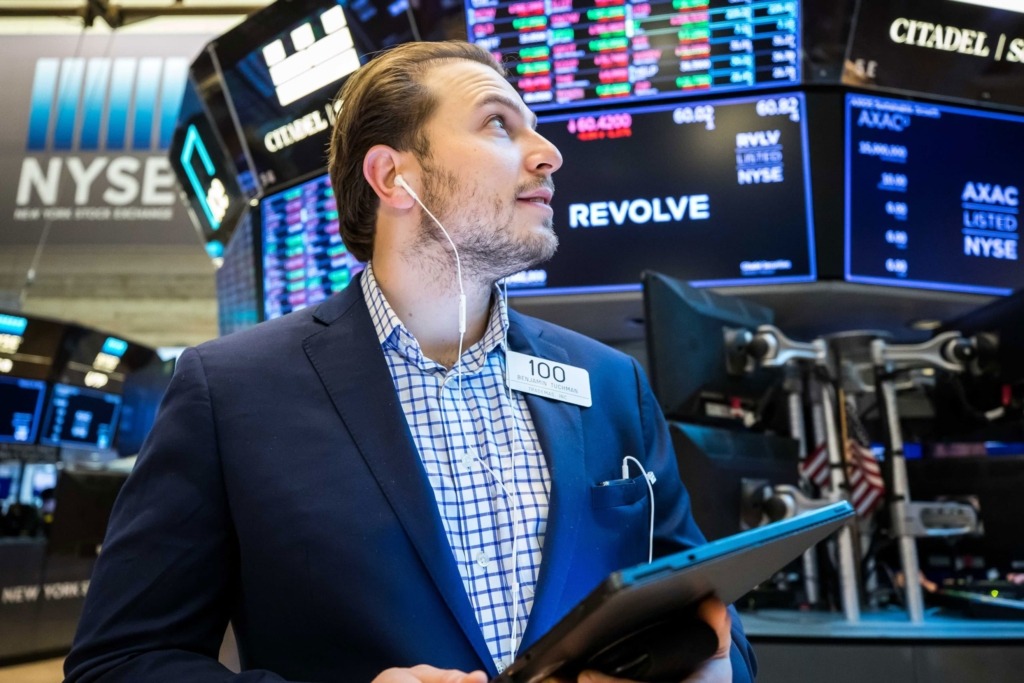
All three major US indices finished in the red on Wednesday. The S&P 500 lost 0.7%, while the Nasdaq Composite dropped 1.1%. The Dow Jones Industrial Average gave up 0.7%.
Energy was the only S&P 500 sector to end the day higher, supported by a rebound in oil prices amid renewed geopolitical tensions involving Iran. Utilities, communication services and consumer discretionary stocks were among the biggest laggards, reflecting the pressure from higher interest rates on more rate sensitive and growth oriented areas of the market.
On the individual stock front, Palo Alto Networks climbed 5% after launching a new AI focused security product. Paychex slumped 8.8%, and McDonald’s shed 4.8%.
Treasury yields climb to levels last seen in 2007
The US 10 year yield rose by 14 basis points to 5.11%, a level not reached since 2007. Three factors pushed yields higher at the same time. Economic data came in stronger than expected, Fed officials made hawkish comments, and demand at a Treasury auction was disappointing.
The biggest trigger was the flash September S&P Global PMI survey. It showed US business activity expanding at its quickest pace in over five years, with price pressures still running high in both factories and the services sector. Strong growth paired with sticky inflation strengthened the case for a further Fed hike next month, which in turn lifted bond yields.
Asian markets and US futures
Most Asian benchmarks traded lower on Thursday as the surge in global bond yields dampened appetite for risk, with the MSCI Asia Pacific region broadly lower. In mainland China, the Shanghai Composite fell 0.9% and the CSI 300 dropped 1.3%. Hong Kong’s Hang Seng eased 0.6%.
Japan was the exception. The Nikkei gained 1.5% as Tokyo trading resumed after a three day holiday.
US stock futures were broadly lower, with contracts on the S&P 500, Nasdaq 100 and Dow each down around 0.15% overnight, following Wednesday’s decline. Elevated yields and firmer oil prices continued to weigh, while attention turned to the upcoming meeting between President Trump and President Xi, where trade, artificial intelligence and semiconductor exports are expected to feature.
European equities
European shares also ended Wednesday in negative territory, hit by climbing government bond yields and more expensive energy. The Euro STOXX 50 fell 0.4%, and the broader STOXX Europe 600 declined 0.3%.
Financials and carmakers were among the weakest areas. Allianz dropped 3.8% and Deutsche Bank slipped 2.6%. Mercedes Benz and BMW each lost around 3%.
Currencies and commodities
The rate outlook in the US fed directly into currency and energy markets. Here is how the euro and oil prices responded.
EUR/USD slides as the dollar hits a near two month high
The US dollar rose to its strongest level in almost two months. Robust data, stubborn inflation and growing bets on an October Fed hike all supported the greenback. EUR/USD slipped to 1.1383, down from 1.1448, with high oil prices and geopolitical uncertainty adding to demand for the dollar.
Oil eases after a sharp rally
Crude prices pulled back in Asian hours after a strong gain on Wednesday. Brent fell around 1% to $102 a barrel, while WTI lost 0.7% to $91.50. In the previous session, WTI had jumped 2.6% to about $93.
Traders remain focused on tensions between the US and Iran, and on whether the Strait of Hormuz can reopen. Around a fifth of the world’s seaborne oil passes through the strait. Signs of improving supply from the Gulf and a build in US crude stocks helped cap the upside.
Economic and geopolitical developments
Several macro and political stories are shaping the backdrop for markets. The key developments are summarised below.
US and China extend their trade truce
Washington and Beijing have agreed to prolong their current trade truce until 10 January, giving both sides more time to work towards a wider economic deal. The extension came after talks between US Treasury Secretary Scott Bessent and Chinese Vice Premier He Lifeng in the run up to the Trump Xi summit. Trade, AI and critical minerals are among the main topics on the table.
US business activity at its highest in more than five years
The S&P Global composite PMI rose to 58.4 in September, the strongest reading in more than five years. Services drove most of the expansion, though manufacturing also picked up and hiring rose firmly. However, severe supply constraints and higher energy bills pushed price pressures higher, reinforcing worries that inflation is proving hard to shift.
Iran signals resistance but keeps the door open to diplomacy
Speaking at the United Nations, Iranian President Masoud Pezeshkian said Iran would not surrender in its war with the US, while pointing to diplomacy as the way to bring it to an end. The Strait of Hormuz remains the focal point of tensions. His remarks came after President Trump warned of further escalation if no agreement is reached.
OECD lifts its 2026 global growth forecast
The OECD now expects the world economy to grow by 2.9% in 2026, an upgrade driven by resilient activity and heavy investment in AI, despite elevated energy costs. It sees growth slowing in 2027 as higher energy prices work their way through economies. The organisation flagged significant downside risks, including a prolonged disruption in the Middle East, rising food prices, weaker equity markets and higher bond yields.
Companies in focus
Analyst ratings, quarterly earnings and other news drove a number of notable share price moves. We split them into company news and broker calls.
Company news
Meta. At its Connect event, Meta showcased new AI hardware and a broader Muse platform. The line up includes a palm sized device and smart glasses without a camera, along with closer integration with computers and partner applications. Meta is adding more personalisation and agent based shopping features, and is looking at transaction fees as a possible way to generate revenue from Muse.
McDonald’s. The company set out its NEXT strategy, aiming for operating margins in the low to mid 50% range and free cash flow conversion in the mid to high 80% range by 2030. The plan centres on four pillars: menu, consumers, restaurants and people. It is backed by $8.5bn of franchisee investment through 2036, with chicken, drinks, restaurant efficiency, technology and AI driven operations identified as growth areas.
Royal Caribbean. The company will buy a 50% stake in Sandals Resorts for $3bn, putting a $6bn value on the all inclusive resort business. The joint venture will oversee 20 Caribbean properties, taking Royal Caribbean beyond its core cruise business. Completion is expected in early 2027, and it would be the group’s largest deal so far.
Ryanair. Chief executive Michael O’Leary said the airline will not add a fuel surcharge, even with jet fuel prices elevated. He suggested rivals may push up fares next summer once their fuel hedges roll off, and expects persistently high fuel costs to speed up airline collapses and consolidation. In his view, Europe could end up with four dominant groups: Ryanair, British Airways, Lufthansa and Air France KLM.
Space sector. Private funding for space companies more than doubled to $23bn in the 12 months to June, as investors favour businesses with proven commercial models. Money is flowing increasingly into Earth observation, in orbit manufacturing and satellite supply chains. The industry is moving away from early stage speculation towards revenue generating activity, and investors are becoming choosier.
Ives Ultra AI Opportunities. Dan Ives is launching a $200 million closed end fund that will invest mainly in equity and equity linked securities of late stage private US AI companies. Pricing is expected on 29 September, with trading on the NYSE due to start on 30 September under the ticker IVAI. The structure offers public market investors a route into privately held AI firms.
Analyst calls and strategy views
HSBC. The bank remains firmly positive on equities, with a maximum overweight stance and a preference for technology, especially in the US and Asia. It expects favourable oil developments and possible shifts in US policy to support risk assets. HSBC also likes European banks, high yield bonds, emerging markets, gilts and gold, while staying underweight eurozone and Japanese government bonds.
Citi on the US midterms. Citi believes the midterm elections will have little effect on S&P 500 fundamentals, though the impact on individual sectors could be larger. A Democratic sweep might sharpen focus on 2028 risks such as higher corporate taxes and AI regulation. On the other hand, curbs on executive tariff and war powers could potentially support markets, while semiconductor stocks may do better under continued Republican control.
Microsoft. Stifel upgraded the stock to Buy and raised its price target to $575, expressing confidence in sustained revenue growth in the mid to upper teens. Azure momentum, a bigger contribution from OpenAI, more efficient infrastructure and wider Copilot adoption underpin the view. Stifel expects lower costs for developing large language models and better margins to offset ongoing heavy AI spending.
CoreWeave. UBS began coverage with a Buy rating and a $120 target, pointing to strong and lasting demand for AI computing power, improving GPU economics and an appealing valuation. It considers worries about leverage and credit risk to be largely reflected in the price. The main risks are high debt levels, uncertain long term profitability and heavy customer concentration, with three clients generating 72% of revenue.
Burberry. Citi kept its Buy rating but trimmed its price target to £14.60, reflecting a weaker environment for luxury goods. It forecasts like for like growth easing to 3% in the second quarter of FY2027, from 5% before. Headwinds include softer conditions in China, hot weather in Europe, weaker US demand, unpredictable tourism flows and geopolitical risk.
BP and TotalEnergies. JPMorgan upgraded BP to Overweight and lifted its target to 675p, citing the company’s restructuring, better fundamentals and expected debt reduction. It cut TotalEnergies to Neutral, arguing that its stronger valuation already reflects robust fundamentals. JPMorgan’s preferred names in the sector are Shell, BP, Eni and Galp, while it points to commodity price swings, Middle East risk and possible European windfall taxes as key risks.
What to watch today
Thursday’s calendar is busy on both sides of the Atlantic. In Europe, investors will look at Germany’s Ifo Business Climate index, the ECB Economic Bulletin and the Swiss National Bank’s interest rate decision. In the US, the focus is on jobless claims, building permits, new home sales, the current account balance and the Kansas City Fed manufacturing survey. Several Fed officials are due to speak, and markets will also track Treasury bill and 7 year note auctions along with the Fed balance sheet.
This information is being provided solely for information purposes and should not be deemed or construed as investment advice, tax, legal, or any other ancillary regulatory advice. CCIS does not accept liability for actions, proceedings, costs, demands, expenses, damages, and losses suffered by persons as a result of information, views, or opinions appearing in this document. The financial instruments discussed are intended for retail clients however, they may not be suitable for all investors and investors must make their own informed decisions and seek their own advice regarding the appropriateness of investing in financial instruments or implementing strategies discussed herein. The value of the investment may go down as well as up and may be affected by changes in currency. Where investments are denominated in a currency other than the investor’s base or reporting currency, changes in foreign exchange rates may adversely affect the value and/or returns of the investment. Any performance figures quoted refer to the past and past performance is not a guarantee nor a reliable guide to future performance. Calamatta Cuschieri Investment Services Ltd (C13729) is licensed by the MFSA to carry out investment services business in terms of the Investment Services Act (Cap. 370). The company is a subsidiary of Calamatta Cuschieri Moneybase plc and is registered at Level 0, Ewropa Business Centre, Dun Karm Street, Birkirkara BKR 9034, Malta.