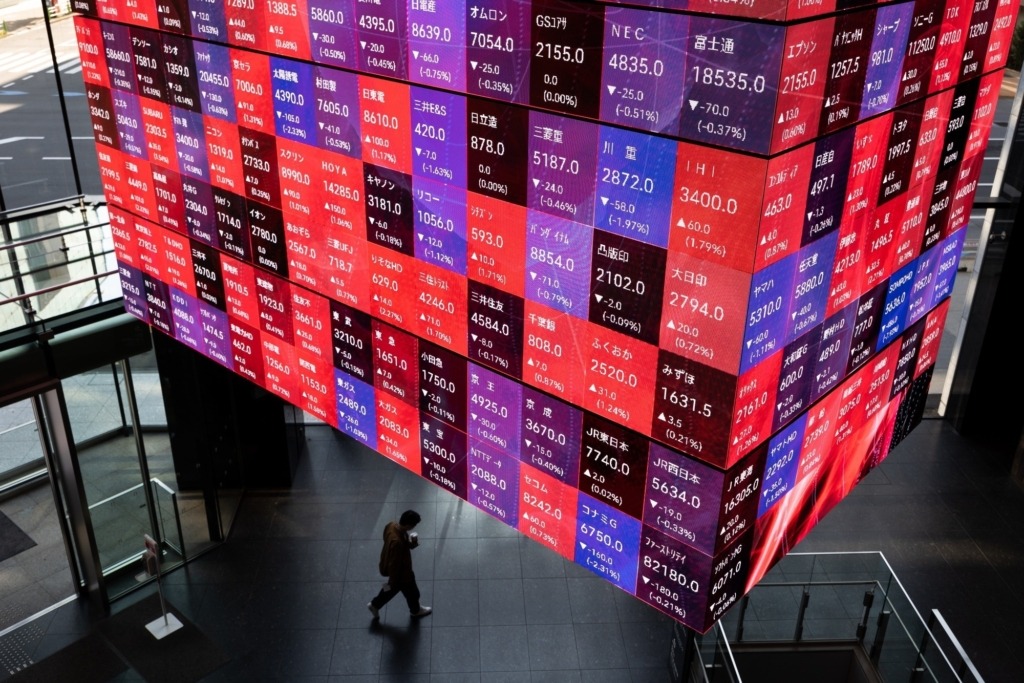
Global markets reacted to a sweeping Democratic win in the US midterm elections on Wednesday, with US equities climbing on the prospect of divided government and European equities supported by expectations of greater congressional oversight of the Trump administration’s fiscal and spending ambitions. The mood cooled after the close, as weaker updates from Qualcomm and Arm revived questions about semiconductor demand.
US and European equities climb on the midterm result
US stocks rallied on Wednesday as investors welcomed the prospect of a split government in Washington and lower political uncertainty. The Dow Jones jumped 3.0%, the S&P 500 added 1.6% and the Nasdaq rose 1.4%. Financials, real estate and communication services were the strongest sectors, while energy lagged as crude prices dropped steeply.
In Europe, the Euro Stoxx 50 climbed 2.3% and the broader Stoxx 600 rose close to 2%. Sentiment was helped by expectations that greater congressional oversight could constrain the fiscal and spending plans of the Trump administration. That same shift creates uncertainty for sectors that depend on government spending, particularly defence and AI infrastructure, where stricter regulatory scrutiny and possible limits on investment incentives could become more relevant.
Technology weakness spreads to Asian markets
Early optimism faded after disappointing results and guidance from Qualcomm and Arm renewed doubts about chip demand and how long the current AI investment cycle can last. US equity futures moved lower after the close and Asian markets traded mixed.
In South Korea, the KOSPI dropped by as much as 5.2%, prompting a temporary halt in trading, with Samsung Electronics and SK Hynix among the biggest decliners. Japan’s Nikkei also eased. Chinese equities bucked the trend, supported by policy measures designed to strengthen the country’s domestic semiconductor industry. The contrast shows how sensitive markets remain to elevated technology valuations and earnings expectations, despite the continued structural investment opportunity in AI.
Bonds, currencies and commodities
Government bonds gained after the election. The 10-year US Treasury yield fell towards 4.9%, as investors expected divided government to limit further deficit-funded tax cuts and spending. The US dollar softened slightly, and gold and silver moved higher.
Oil fell more than 8% on Wednesday on hopes that greater political pressure after the vote could encourage a negotiated settlement with Iran and ease disruption to supplies through the Strait of Hormuz. Brent crude steadied near $94.62 a barrel in Asian trading, although the diplomatic outlook remains uncertain.
Taken together, markets are weighing improved political visibility and lower oil prices against persistent inflation concerns, high bond yields and the risk of further swings in technology stocks. Citadel Securities still sees room for equities to recover into year end, citing company share buybacks, demand from retail investors and relatively light positioning among institutional investors.
Corporate developments and investment implications
Semiconductors remain a key source of uncertainty
Qualcomm posted fourth-quarter revenue of $10.44bn and adjusted earnings per share of $2.17, both slightly above forecasts. Its core handset division was considerably weaker, with revenue down 26% to $5.14bn as smartphone demand stayed soft and Apple-related sales declined. Guidance for earnings came in slightly under expectations, and higher costs for manufacturing, packaging and memory could put pressure on margins. Automotive was a clear bright spot, with revenue up 89%, and the company continues to expand into IoT and data centres through agreements with major technology groups.
Arm also beat quarterly expectations and came in slightly above revenue guidance, helped by demand for energy-efficient processors in AI data centres. Slower royalty growth and high market expectations limited the positive reaction. Both sets of results point to a gap between the long-term opportunity in AI infrastructure and the near-term earnings and valuation risks facing semiconductor companies.
Political and regulatory risk for AI infrastructure and defence
The midterm outcome is becoming increasingly relevant for companies tied to AI infrastructure, energy and government spending. Several data-centre operators and technology infrastructure companies came under pressure on expectations of greater scrutiny of data-centre development, electricity demand, tax incentives and antitrust matters. Vistra weakened after Democratic gains in Texas, while Tesla and SpaceX faced concerns over potential congressional scrutiny of their government-related activities and investment plans.
SoftBank fell around 5% after Chinese regulators reportedly blocked its proposed $5.4bn acquisition of ABB’s robotics division, a setback to its ambitions in physical AI. US defence stocks also retreated as investors reassessed the scope for further increases in Pentagon spending. The extent of any policy change is still uncertain, but regulatory and political considerations are adding another layer of risk to sectors that have benefited from expectations of substantial government and private-sector investment.
Salesforce credit rating cut by S&P Global
S&P Global Ratings lowered Salesforce from A+ to A, pointing to higher leverage from debt-funded share buybacks and acquisitions, including Informatica, Braze and Fin. The agency also cited moderating organic revenue growth and greater reliance on acquisitions to support expansion.
Salesforce still produces strong cash flow and sees opportunities to monetise its Agentforce and Data360 AI platforms. Further debt-funded shareholder returns or acquisitions, however, could put more pressure on its credit profile. The move is a reminder that strong exposure to AI does not remove the importance of balance-sheet discipline and sustainable cash generation.
Rheinmetall cuts guidance while Heidelberg Materials rises
Rheinmetall lowered its 2026 sales forecast for the second time in three months, citing delays to the German Arminius Boxer programme and slower ammunition approvals. It now expects revenue of approximately €13.2bn and has lowered its operating margin target. The cuts contrast with strong third-quarter results, highlighting execution and contract timing risks despite the longer-term increase in European defence spending.
Heidelberg Materials gained more than 9% after reporting stronger-than-expected third-quarter results, improving its cost-saving target and reaffirming full-year guidance. The performance reflects favourable pricing, resilient European demand and operational efficiencies.
Other corporate results
Novo Nordisk rose 5.5% after beating third-quarter expectations and upgrading its 2026 outlook, supported by continued growth in obesity care and demand for Wegovy. Expedia fell after issuing a weaker fourth-quarter revenue outlook, citing geopolitical disruption and uncertainty, despite stronger third-quarter results and an improved full-year forecast.
Uber reported growth across mobility and delivery, with gross bookings up 20%, although its earnings outlook was slightly disappointing. McDonald’s beat earnings expectations, but modest US comparable sales growth highlighted the continued importance of value-led consumer spending. Datadog delivered strong revenue and earnings growth, though cautious fourth-quarter guidance limited the market reaction.
PayPal checkout growth fails to accelerate
PayPal remains under pressure as branded checkout growth has failed to accelerate, remaining at just 1% to 2% for a fourth consecutive quarter. Earnings beat expectations, but revenue growth of 2% and a subdued outlook for earnings expansion continue to weigh on sentiment. More broadly, the results reinforce the importance of distinguishing between companies delivering strong headline earnings and those demonstrating sustainable underlying revenue growth.
Economic data and earnings to watch today
Bank of England rate decision
The Bank of England’s interest rate decision is the main economic event today, with markets expecting a 25-basis-point reduction in Bank Rate from 4.00% to 3.75%.
US labour market and productivity data
In the US, initial and continuing jobless claims are due, along with third-quarter non-farm productivity and unit labour costs. These figures will give further insight into labour market conditions and underlying inflationary pressures. Investors will also monitor Challenger job cuts and comments from Federal Reserve officials, as markets continue to assess the outlook for monetary policy following the recent strength in employment indicators. Friday’s US non-farm payrolls report remains the next major focus for investors.
Corporate earnings
Toyota, ConocoPhillips, DBS Group, Sony and Deutsche Telekom are scheduled to report results today.
This information is being provided solely for information purposes and should not be deemed or construed as investment advice, tax, legal, or any other ancillary regulatory advice. CCIS does not accept liability for actions, proceedings, costs, demands, expenses, damages, and losses suffered by persons as a result of information, views, or opinions appearing in this document. The financial instruments discussed are intended for retail clients however, they may not be suitable for all investors and investors must make their own informed decisions and seek their own advice regarding the appropriateness of investing in financial instruments or implementing strategies discussed herein. The value of the investment may go down as well as up and may be affected by changes in currency. Where investments are denominated in a currency other than the investor’s base or reporting currency, changes in foreign exchange rates may adversely affect the value and/or returns of the investment. Any performance figures quoted refer to the past and past performance is not a guarantee nor a reliable guide to future performance. Calamatta Cuschieri Investment Services Ltd (C13729) is licensed by the MFSA to carry out investment services business in terms of the Investment Services Act (Cap. 370). The company is a subsidiary of Calamatta Cuschieri Moneybase plc and is registered at Level 0, Ewropa Business Centre, Dun Karm Street, Birkirkara BKR 9034, Malta.